Salmon Coconut Curry is a delightful dish that will tantalize your taste buds with its rich flavors and creamy texture. This easy Thai-inspired recipe features succulent salmon cooked to perfection in a luscious coconut milk sauce infused with aromatic spices.
This incredible Salmon Coconut Curry transforms simple ingredients into restaurant-quality flavors that will blow your mind. Foolproof techniques guarantee perfect results every single time making even novice cooks feel like professional chefs. Stunning visual appeal with gorgeous colors creates the ultimate Instagram-worthy dish for any occasion. Endlessly adaptable for different dietary needs while working beautifully for meal prep or entertaining groups effortlessly.
Ingredients for Salmon Coconut Curry
Here is what you will need to make this delicious Salmon Coconut Curry:
1 pound fresh salmon: Choose high-quality salmon for the best flavor.
Salt & pepper: Season to taste for added flavor enhancement.
1 tablespoon olive oil: Used for cooking the salmon to a golden brown.
1 tablespoon butter: Adds a rich, creamy texture to the dish.
1/2 medium onion (chopped): Provides a sweet and savory base flavor.
2 cloves garlic (minced): Infuses the curry with aromatic goodness.
2 heaping tablespoons Thai red curry paste: The star ingredient that brings heat and depth.
1/2 teaspoon fish sauce (optional but recommended, see note): Enhances umami flavor in the curry.
1 (13.5 ounce) can full-fat coconut milk: Creates a creamy consistency and balances spices.
1/2 teaspoon brown sugar: Adds a hint of sweetness to balance flavors.
1/2 cup matchstick cut carrots: Provides crunch and color to the dish.
1 heaping cup chopped broccolini: Adds nutrition and vibrant greens.
1 teaspoon lime juice: Brightens up the flavors with acidity.
2 tablespoons torn/chopped fresh basil: Fresh herb garnish that enhances aroma.
2 tablespoons chopped fresh cilantro: Adds freshness and complements the dish perfectly.
How to Make Salmon Coconut Curry
Follow these simple steps to prepare this delicious Salmon Coconut Curry:
Step 1: Prepare the Salmon Begin by cutting the salmon into four equal pieces, ensuring they are uniform in size for even cooking. Pat both sides dry with a paper towel, then season generously with salt and pepper.
Step 2: Sear the Salmon Heat olive oil and butter in a skillet over medium-high heat until shimmering. Cook the salmon skin-side down for about five minutes until golden brown, then flip it over and cook for an additional 2-3 minutes until almost fully cooked through.
Step 3: Remove and Set Aside Salmon Carefully take the salmon out of the pan and place it on a plate while you prepare the sauce. If desired, you can remove the skin from each piece before returning it to the pan later.
Step 4: Sauté Aromatics In the same skillet, reduce excess oil while keeping about one tablespoon in there. Add chopped onion and sauté for around three minutes until lightly browned, then stir in minced garlic and red curry paste, cooking for about one minute until fragrant.
Step 5: Create the Coconut Sauce Pour in fish sauce if using, followed by coconut milk, brown sugar, matchstick carrots, and chopped broccolini into the skillet. Allow this mixture to gently bubble for about five minutes until vegetables are tender-crisp yet still vibrant.
Step 6: Finish Cooking and Serve Stir in lime juice before adding back in your seared salmon pieces so they can warm through without overcooking. Adjust seasoning as needed with more salt or pepper, then garnish with torn basil and cilantro before serving immediately over rice or noodles if desired.
Perfecting Salmon Coconut Curry Cooking Process
To create a delectable Salmon Coconut Curry, efficiency is key. By preparing all your ingredients before starting to cook, you can streamline the process and focus on layering flavors. This not only saves time but also ensures that every step flows smoothly without interruptions.
Add Your Touch to Salmon Coconut Curry
Feel free to customize your Salmon Coconut Curry by adding your favorite vegetables or proteins. You can substitute salmon with shrimp or tofu for a different texture. Also, consider adjusting the level of heat by modifying the amount of red curry paste to suit your taste preferences.
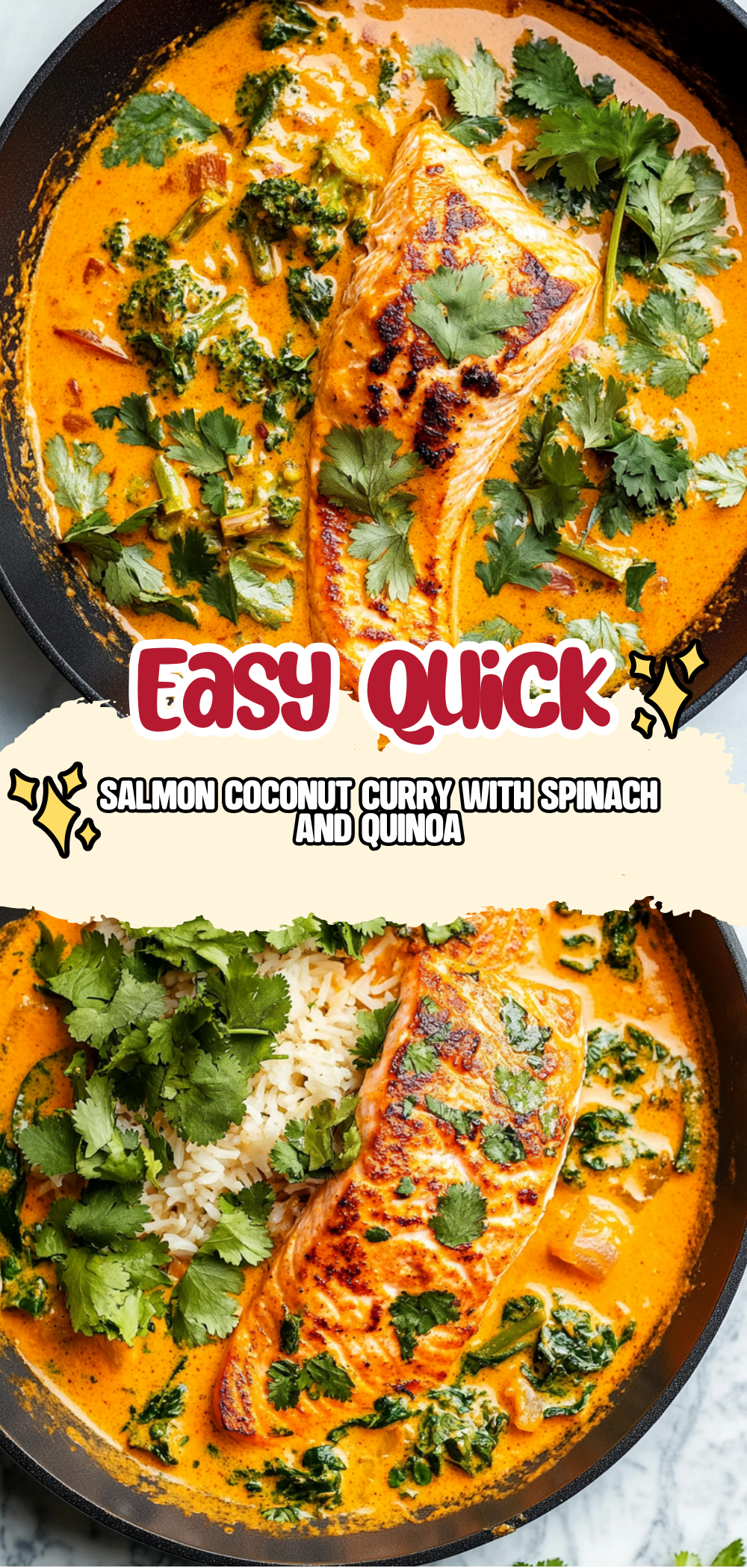
Storing and Reheating Salmon Coconut Curry
To store your leftover Salmon Coconut Curry, allow it to cool completely before placing it in an airtight container. It will keep well in the refrigerator for up to three days. When reheating, do so gently over low heat on the stovetop to maintain the fish’s texture and prevent overcooking.
Chef's Helpful Tips for Salmon Coconut Curry
I fondly remember my first attempt at making this dish during a cozy dinner party with friends. The aroma filled the kitchen as we enjoyed each other’s company, creating lasting memories around a table adorned with delicious food.
FAQs About Salmon Coconut Curry
What is Salmon Coconut Curry?
Salmon Coconut Curry is a delightful dish that combines tender salmon fillets cooked in a rich and creamy coconut milk sauce infused with Thai red curry paste. This recipe brings together flavors from Thailand with fresh vegetables, making it both comforting and satisfying. The unique combination of spices and creamy textures makes it an ideal main course for any occasion.
Can I use other types of fish in this curry?
Absolutely! While salmon is delicious in this recipe, you can easily substitute it with other types of fish such as cod, halibut, or even shrimp. Adjust cooking times accordingly based on the type of seafood you choose to ensure it’s perfectly cooked without being overdone.
How spicy is this Salmon Coconut Curry?
The spice level of your Salmon Coconut Curry largely depends on how much red curry paste you decide to use. For those who prefer milder flavors, start with less paste and gradually add more until you reach your desired heat intensity. Remember that garnishing with fresh herbs like basil and cilantro can also help balance out spiciness.
Can I make this dish vegan?
Yes, you can easily adapt this recipe to be vegan-friendly! Substitute salmon with firm tofu or chickpeas for protein and use vegetable broth instead of fish sauce. Ensure you’re using vegan-friendly coconut milk as well, which is typically plant-based but always good to double-check.
Conclusion for Salmon Coconut Curry
In summary, Salmon Coconut Curry offers a delicious blend of rich flavors and comforting textures perfect for family dinners or special gatherings. This easy-to-make dish allows for variations tailored to individual tastes while delivering a satisfying meal packed with nutrients. Try out this delightful recipe today and enjoy the comforting warmth of homemade Salmon Coconut Curry!
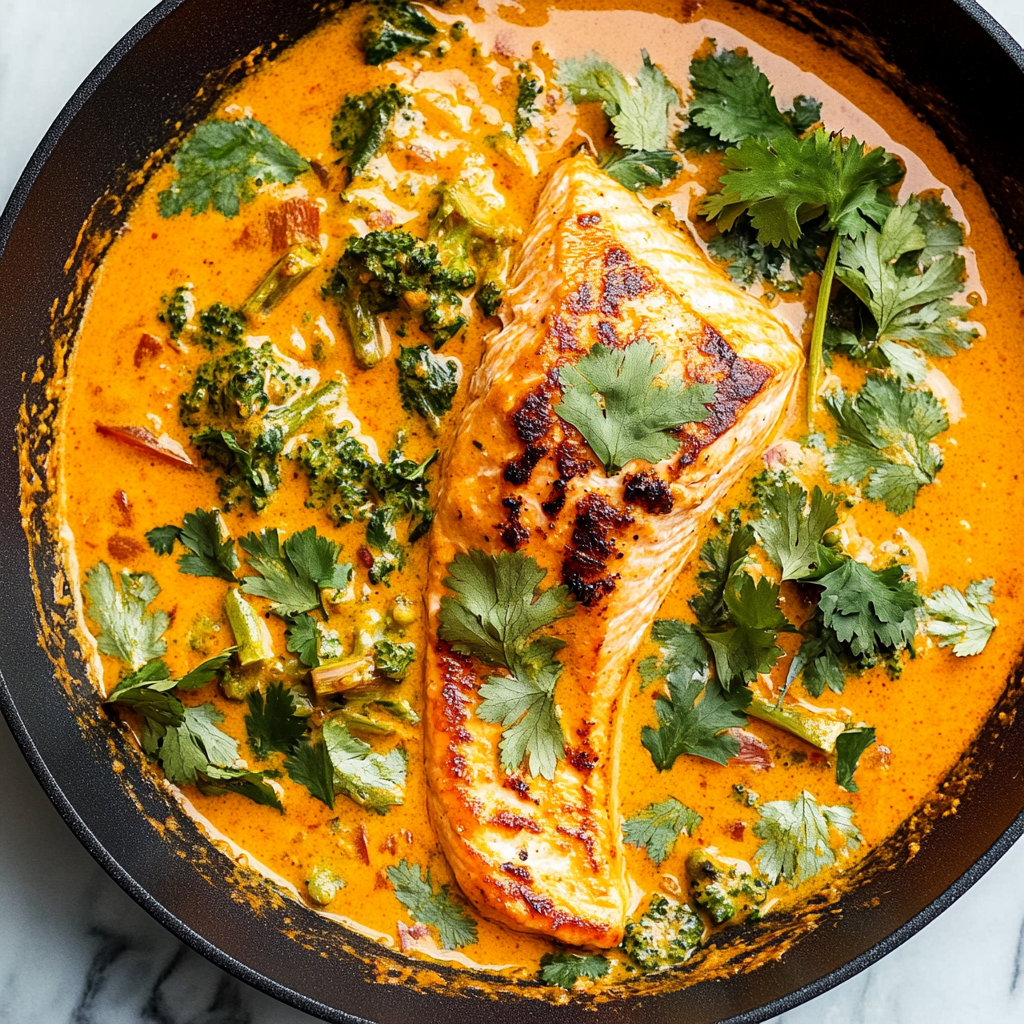
Salmon Coconut Curry
Ingredients
Method
- Begin by cutting the salmon into four equal pieces, ensuring they are uniform in size for even cooking. Pat both sides dry with a paper towel, then season generously with salt and pepper.
- Heat olive oil and butter in a skillet over medium-high heat until shimmering. Cook the salmon skin-side down for about five minutes until golden brown, then flip it over and cook for an additional 2-3 minutes until almost fully cooked through.
- Carefully take the salmon out of the pan and place it on a plate while you prepare the sauce. If desired, you can remove the skin from each piece before returning it to the pan later.
- In the same skillet, reduce excess oil while keeping about one tablespoon in there. Add chopped onion and sauté for around three minutes until lightly browned, then stir in minced garlic and red curry paste, cooking for about one minute until fragrant.
- Pour in fish sauce if using, followed by coconut milk, brown sugar, matchstick carrots, and chopped broccolini into the skillet. Allow this mixture to gently bubble for about five minutes until vegetables are tender-crisp yet still vibrant.
- Stir in lime juice before adding back in your seared salmon pieces so they can warm through without overcooking. Adjust seasoning as needed with more salt or pepper, then garnish with torn basil and cilantro before serving immediately over rice or noodles if desired.

Leave a Comment